
AI brand monitoring is the practice of tracking how AI assistants such as ChatGPT, Gemini, Google AI Mode, Perplexity, and Claude describe, compare, and recommend your brand. For luxury houses, it answers a question that now shapes revenue: when a client asks AI about your category, are you named, and are you described the way you would describe yourself?
That question is no longer theoretical. Bain & Company and the Comité Colbert report that 82% of top-tier luxury customers used an AI tool during their most recent purchase, and 47% of in-store shoppers consulted AI before visiting a boutique. Roughly 70% of luxury prompts start without naming any brand, and 90% of the URLs that large language models cite come from outside brand websites. In other words, AI is introducing your brand to high-net-worth (HNW) clients, generally defined as individuals with at least $1 million in investable assets, using sources you do not control.
This guide gives CMOs, brand directors, and communications leads a practical seven-step framework for AI brand monitoring in 2026: what to measure, which prompts to test, how to trace the sources behind each answer, and who should own fixing what AI gets wrong.
Try this five-minute self-assessment today: Ask ChatGPT and Gemini five unbranded questions a client might ask about your category, such as “What is the best Swiss dress watch for a first serious purchase?” or “Which private-client law firms in Miami handle cross-border estates?” Were you named? Were you recommended or simply mentioned? Was the description accurate and consistent with your price tier and heritage?
What Is AI Brand Monitoring? (And Why It Isn’t Social Listening)
AI brand monitoring is the ongoing measurement of how generative AI platforms mention, describe, and recommend a brand across a fixed set of buyer-style prompts. It tracks presence, accuracy, sentiment, and competitive share of voice, and it identifies the third-party sources each model relies on so errors can be corrected.
Three disciplines sound similar but answer different questions:
- Social listening tracks what people post about you on social platforms, forums, and review sites.
- Generative engine optimization (GEO) improves the likelihood that AI systems include and cite your content. Our generative engine optimization services cover that work in depth.
- AI brand monitoring tracks what AI systems actually tell buyers about you, which is often a synthesis of reviews, press, marketplaces, and forum threads.
The distinction matters because AI answers behave like a new, unmoderated review channel. There is no comment section to respond in, no star rating to dispute, and no notification when an answer changes. A buyer can read a confident but outdated description of your brand at the exact moment of research, and you will never see it unless you are looking.
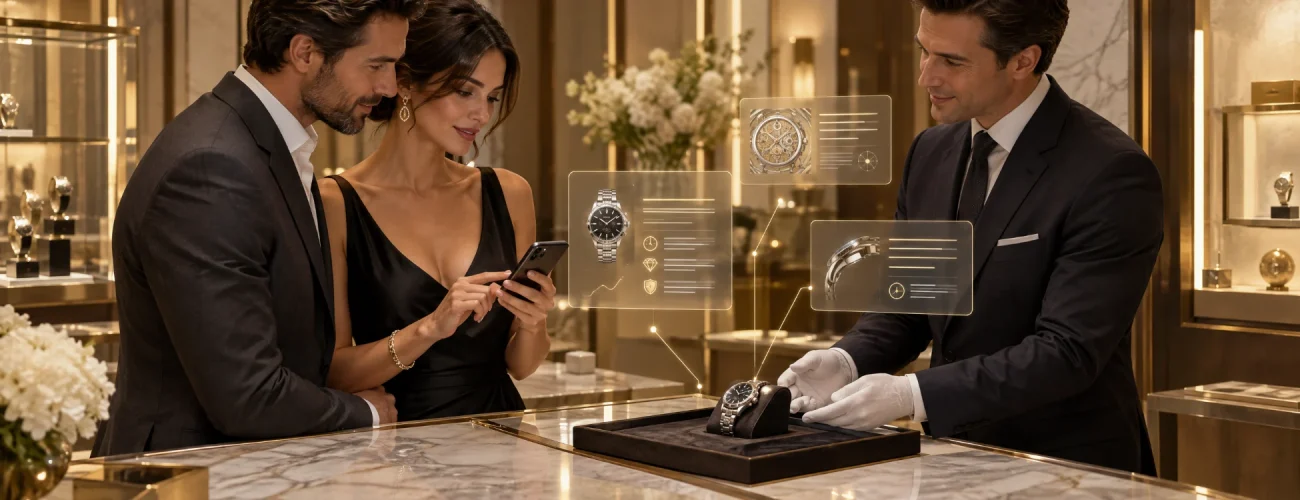
Why AI Gets Luxury Brands Wrong
Luxury is unusually exposed to AI misinterpretation. A June 2026 Harvard Business Review analysis found that large language models reliably recognize overt luxury signals such as brand names, price points, and explicit claims, yet frequently misread the subtler cues that matter most to discerning buyers: rarity, heritage, artistic associations, understated design, and sense of place.
The result is a kind of flattening. A model compresses decades of craftsmanship into a list of specifications, a price band, and whichever third-party opinion it found most often. Common failure modes that AI brand monitoring surfaces include:
- Dated model lines: AI recommends a discontinued reference or last season’s collection as your current flagship.
- Price-tier confusion: the brand is grouped with accessible premium labels, or a competitor is named as “the better value.”
- Grey-market and discount associations: answers cite resellers or outlet listings ahead of authorized boutiques.
- Missing heritage: the founding story, atelier, or provenance that justifies the price never appears.
- Wrong local facts: closed showrooms, outdated hours, or former leadership presented as current.
The stakes are rising. BCG and Altagamma report that around 80% of True-Luxury consumers who use generative AI already rely on it to research luxury, and they trust it roughly twice as much as social media and influencers. When an AI tool sounds authoritative, buyers tend to believe it. That is why AI brand monitoring has become a brand-protection priority rather than an SEO side project.
Step 1: Run a Baseline Audit of How AI Describes You Today
Before you build dashboards, start AI brand monitoring with a dated snapshot. Ask each major platform a short set of branded questions (“What is [Brand] known for?”, “Is [Brand] worth the price?”, “Who owns [Brand]?”) and record the full answers, the sources cited, and the date. Screenshot everything. This baseline becomes the “before” picture that proves whether later remediation worked.
Score each answer against a simple brand truth sheet: your current collections or services, price positioning, locations, leadership, heritage facts, and the three to five attributes you want every description to include. Any gap between the sheet and the answer becomes a line item for Step 5.
Step 2: Build a Prompt Panel That Mirrors How Affluent Buyers Ask
Branded questions only reveal how AI describes you once someone already knows your name. Because about 70% of luxury prompts name no brand at all, the more important test is whether you appear when buyers ask open questions. Build a fixed prompt panel of 20 to 40 questions across four intent types:
- Discovery: “What are the best independent watchmakers for collectors?”
- Comparison: “How does [Brand] compare with [Competitor] for resale value?”
- Worth-it questions: “Is a bespoke tailoring commission worth it over made-to-measure?”
- Local intent: “Who is the best luxury car dealer near Palm Beach?”
Write prompts the way affluent clients speak, including budget, location, and occasion. Run the same panel across ChatGPT, Gemini, Google AI Mode, Perplexity, and Claude, and keep the wording identical each cycle so results stay comparable over time. A stable panel is the backbone of reliable AI brand monitoring. Advertising Avenue builds these panels by vertical, from luxury automotive and fine jewelry to private-client law and wealth management.
Step 3: Track the Five Metrics That Matter
Mention counts alone can mislead a luxury brand. Being named in a list of “affordable alternatives” is a mention, but it is not a win. An effective AI brand monitoring program tracks five metrics:
| Metric | What it measures | Why it matters for luxury |
|---|---|---|
| Presence | Share of unbranded panel prompts in which your brand is named | Shows whether AI considers you part of the category conversation |
| Recommendation rate | Share of answers in which you are actively suggested, not just listed | Separates real consideration from a passing reference |
| AI share of voice | Your mentions compared with named competitors across the panel | Benchmarks your competitive position in AI search |
| Accuracy | Share of factual claims about you that are correct and current | Protects against outdated models, prices, and locations |
| Positioning fit | Whether descriptions match your price tier, heritage, and tone | Guards hard-won brand equity from flattening |
Sentiment is worth logging too, but for most luxury brands accuracy and positioning fit carry more weight than raw volume. A smaller number of precise, on-brand mentions is more valuable than frequent appearances in the wrong company. Many tools roll these signals into a single AI visibility score; treat that number as a summary, and always read the underlying answers.
Step 4: Map the Third-Party Sources That Shape AI Answers
If 90% of the URLs cited by AI models come from outside brand websites, your owned site is only a small part of the story. For every panel answer, your AI brand monitoring log should capture the sources cited or clearly paraphrased: publications, marketplaces, review sites, forums, directories, Wikipedia, and social profiles.
Patterns emerge quickly. A watch brand may find that two enthusiast forums and one reseller shape most answers. A law firm may learn that legal directories and a years-old news article define it. Prioritize sources by how often they are cited and how far they deviate from your brand truth sheet. That ranking tells PR, partnerships, and listings teams exactly where to focus.
Social profiles count as well, which is why consistent, active social media management supports AI visibility. For more context, see our analysis of how social media engagement influences visibility.

Step 5: Correct the Record with a Remediation Playbook
AI brand monitoring shows you what is wrong; remediation fixes it. No one can edit a model directly. What you can change are the sources models learn from and retrieve. Work through this sequence:
- Fix owned facts. Update your website, About page, and product or service pages, and make sure structured data reflects current reality. Our guide to schema markup and rich snippets covers the essentials, and website trust signals explains which credibility cues models and buyers look for.
- Update profiles and listings. Correct Google Business Profiles, directories, marketplaces, and dealer or retailer locators.
- Address cited third-party sources. Request corrections from publications, refresh partner pages, and earn accurate new coverage in the outlets models already trust.
- Publish clarifying content. Create clear, authoritative pages that answer the exact questions where AI gets you wrong, written in plain language machines can parse.
- Use platform feedback channels. Flag factually wrong answers through each assistant’s built-in feedback tools.
- Re-test and document. Run the panel again and compare results against your dated baseline.
Set realistic expectations. Retrieval-based answers in tools like Google AI Mode and Perplexity can shift within weeks once sources update, while answers drawn from a model’s training data can lag for months. That gap is why AI brand monitoring has to be continuous, not a one-time project.
Step 6: Assign Ownership and Set a Review Cadence
The most common gap in AI brand monitoring is not tooling; it is ownership. Start with one diagnostic question: who in your organization owns what AI says about you? In most companies, the answer is everyone, which means no one.
A workable model makes brand or marketing leadership the accountable owner, with defined roles for PR (earned sources), SEO and web (owned facts and structured data), social (profiles), and legal or compliance (regulated claims, especially for law, wealth, and healthcare firms). Run the full prompt panel monthly, with a deeper quarterly review that adds competitor benchmarking and source mapping. Trigger an extra re-test after launches, price changes, leadership changes, or negative press.
Step 7: Report AI Brand Monitoring Results to the Board
AI brand monitoring data now belongs alongside traditional brand health metrics such as awareness, consideration, and net promoter score. A concise executive dashboard should show presence and recommendation rate by platform, AI share of voice against three to five named competitors, accuracy and positioning-fit scores, the top cited sources, and the status of open remediation items. Trend lines matter more than any single month.
On resourcing, brands typically run AI brand monitoring in one of three ways:
- Self-serve tools: AI visibility platforms automate prompt runs and dashboards, but most are built for volume rather than nuanced luxury positioning.
- In-house programs: offer full control but require analyst time to run panels, read answers, and coordinate fixes.
- Agency programs: combine tooling with human review, source mapping, and remediation across PR, SEO, and social.
Many pages ranking for this topic are written by tool vendors. A vendor-neutral approach lets you choose the right mix, and for most mid-sized luxury brands, a hybrid of one tool plus expert review delivers the strongest return. This ties directly to measuring success beyond clicks and to the ROI of appearing in AI-generated answers.
The Presence, Accuracy, Preference Ladder
To keep executives aligned, Advertising Avenue frames AI brand monitoring results as a three-rung ladder:
- Presence: AI names your brand in unbranded category prompts.
- Accuracy: AI describes your brand correctly, with current facts, price tier, and heritage intact.
- Preference: AI actively recommends your brand over competitors for the clients you want.
Most brands discover they are stronger on one rung than another. A heritage house may enjoy high presence but poor accuracy; a newer atelier may be described accurately when named but rarely surfaced. The ladder makes priorities obvious and gives the board a simple way to track progress.
It also sets up the next frontier. As AI agents begin acting on buyers’ behalf, a shift covered in our guide to agentic commerce for luxury brands, what AI says about you increasingly determines what AI does for you.
Conclusion: Make AI Brand Monitoring a Standing Discipline
AI brand monitoring gives luxury and enterprise brands something they have lacked since generative search arrived: visibility into a channel that describes them to their best clients every day. Establish a baseline, build a buyer-style prompt panel, measure what matters, trace the sources, fix the record, assign ownership, and report it like any other brand asset. The brands that start now will shape how AI tells their story. Those that wait will inherit someone else’s version.
Want to know what AI is saying about your brand? Request a complimentary AI Brand Perception Snapshot from Advertising Avenue: 10 prompts, 3 platforms, and 1 competitor benchmark, with clear next steps. Contact our team to schedule yours.
We would love to hear from you: what is the most surprising thing an AI assistant has said about your brand?
Frequently Asked Questions
AI brand monitoring is the ongoing practice of tracking how AI assistants such as ChatGPT, Gemini, Google AI Mode, Perplexity, and Claude mention, describe, and recommend your brand. It measures presence, accuracy, sentiment, and competitive share of voice, and it identifies which sources the models rely on so inaccuracies can be corrected.
Social listening tracks what people post about you. AI brand monitoring tracks what AI systems tell people about you, which is often synthesized from reviews, press, forums, and listings. The two overlap, but AI answers reach buyers at the moment of research and can repeat outdated or off-brand descriptions.
Not directly. You can influence the sources models draw from: correct facts on your site and in structured data, update business profiles and directory listings, earn accurate coverage on the publications models cite, and publish clear, authoritative content. Then re-test on a schedule to confirm the answers have changed.
Track five: presence (are you named in unbranded category prompts), recommendation rate (are you suggested, not just mentioned), AI share of voice against named competitors, factual accuracy, and positioning fit (does the description match your price tier and heritage). For luxury, accuracy and positioning often matter more than raw mention volume.
Start with ChatGPT, Google Gemini, Google AI Mode and AI Overviews, Perplexity, and Claude. Together they cover the assistants affluent buyers most often use for discovery and comparison. Add regional platforms if you sell heavily in markets such as China, where local assistants dominate.
Yes, in most cases. Mid-sized luxury brands often have less third-party coverage than global houses, so a single outdated review or reseller listing can dominate AI answers. A focused AI brand monitoring program with a modest prompt panel and quarterly source mapping is affordable and quickly reveals the highest-impact fixes.
Most luxury and enterprise brands benefit from a fixed prompt panel tested monthly, with a deeper quarterly review that includes competitors and source mapping. Re-test after major launches, price changes, leadership changes, or negative press, since AI answers can lag behind reality.